A question we could not put down: why Project Yaadhum exists

Project Yaadhum began with something we kept watching happen and could not explain: two equally capable students, the same school, entirely different futures. Nobody could tell us why. So we went to find out properly.

A term of ordinary days. One of them was a deadline. Nobody in the room knew which.

Our mission

To write down how this decision is really made, and to hand it back to the people making it.

Every year, families choose a stream in a matter of weeks, on marks, hope and whatever information happened to reach them. We are building the first honest record of that process, school by school, and using it to make the next decision a little better informed than the last.

Our vision

A student’s possibilities decided by what they are capable of, not by where they were born.

A Tamil line two thousand years old says every town is our own and every person our kin. We took it as a premise rather than a slogan. If that is true, then the district a child grows up in should not quietly decide which doors are open to them, and that is a claim you can go and check.

Not a product. A question nobody has studied properly.

Three things we hold to. Each one is a claim about the world rather than a value on a wall, which means fieldwork can confirm it or prove us wrong.

The claim

A student’s possibilities should not depend on which district, which school, or which family happened to raise them.

The blind spot

That quiet arithmetic is deciding futures every year, and it has never been looked at honestly.

The choice

We would rather spend a year finding out how it truly works than a week assuming we already know.

The people behind it

We have spent our working lives on either side of this question: in schools and student mentoring, and in strategy consulting and technology.

We mentor school and college students through Naan Mudhalvan, the Ministry of Education’s Vidyanjali programme, and as education volunteers with the United Nations, work that puts us in exactly the rooms this research is about.

Our own notes are below, in our own words.

These are the volunteer mentoring roles our own team holds. The organisations above are not affiliated with Project Yaadhum and do not endorse, certify or accredit this work.

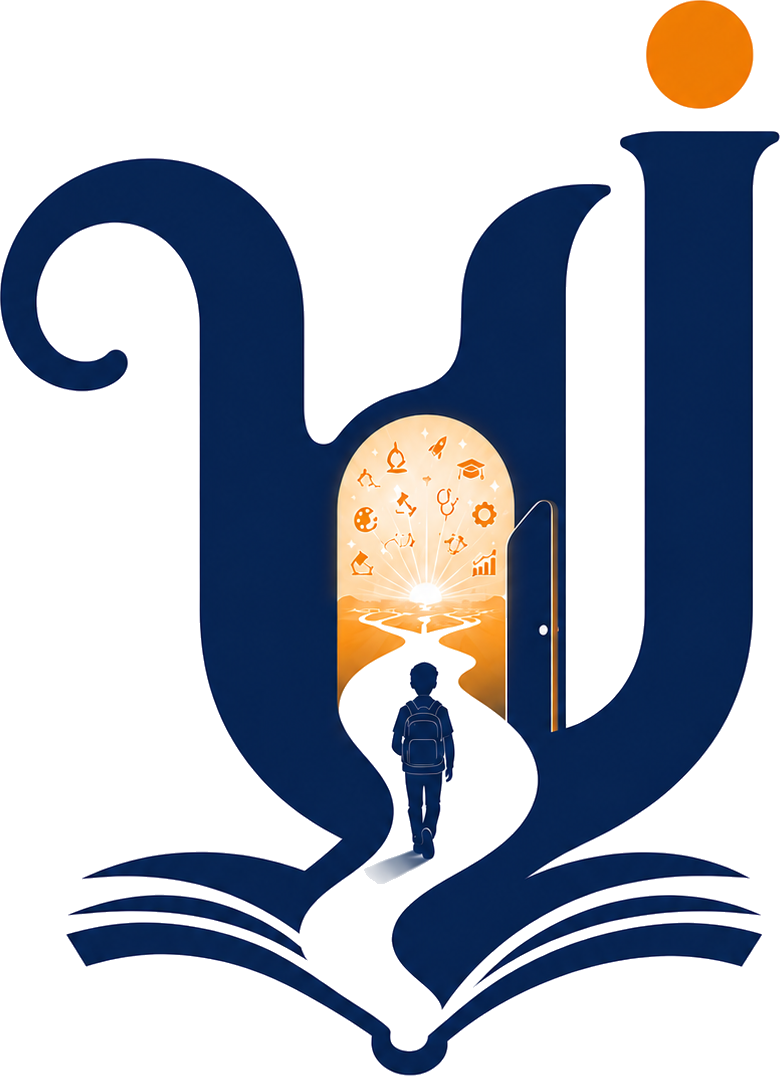
A note from the founder

Komala Maran, Founder of Project Yaadhum

Komala MaranFounder

I studied at IIIT Allahabad. My younger brother later went to IIT Delhi. But neither of us knew what JEE was until Class 10.

One evening, my father heard at a friend’s house that their son had got into an NIT after studying at a coaching institute in Andhra. He went and found out more, and moved me there for Classes 11 and 12.

I had finished ten years of school without knowing that examination existed. That one conversation reached us at the right time, and it changed the direction of my education.

It was luck, and it was my father’s grit. I have never been comfortable treating luck as a system. It left me with a question I have carried since:

How many capable students make life-changing educational decisions based on what information happened to reach them, and when?

Now the story is different. Everyone knows JEE and NEET. That is exactly what I want to ask you about. Out of your Class 9 students, how many can name a third thing?

I do not think anyone in the system is careless. Teachers notice things. Parents worry about the right things. Principals know which children are drifting. But much of that knowledge is informal. It is not always carried forward, acted on, or checked again when the next important decision arrives.

That is what Project Yaadhum wants to understand. Before we try to build anything, we are going school by school to learn how students, families and schools actually make these decisions today.

That is all we are doing right now.

Komala Maran Founder, Project Yaadhum · IIIT Allahabad · Seven years in strategy consulting · Mentors students through Naan Mudhalvan and the Ministry of Education’s Vidyanjali programme
A note from the founding member

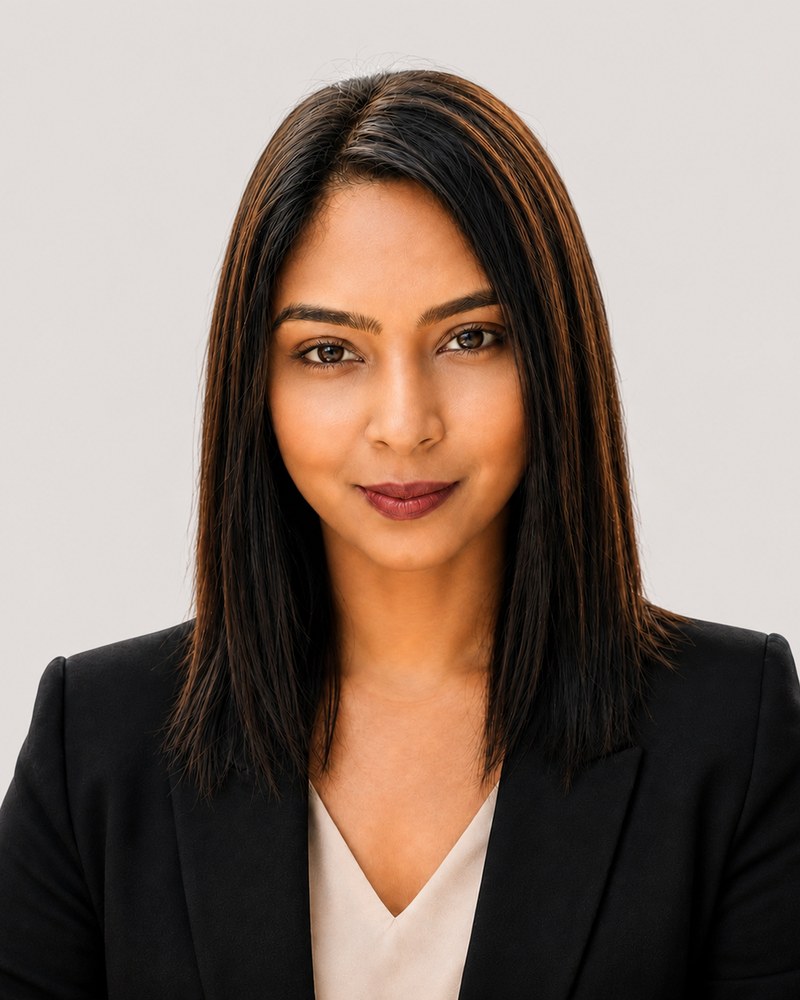
Abisho George, Founding Member of Project Yaadhum

Abisho GeorgeFounding Member

My parents gave me two things: trust, and the freedom to use it. Every decision I made, they backed completely, and I spent years making sure I never gave them a reason to regret it.

But trust is not direction. When I had to pick a stream after Class 10, I did not choose the one I wanted. I chose the one that closed the fewest doors, because I did not know which door I would eventually need.

I found out much later that I was good at mathematics. Solving problems never tired me the way everything else did. By the time I was certain of it, my board exams were behind me, and when I looked up the country’s best institute for what I finally wanted to study, the application window had already closed.

I did not lose that seat on merit. I lost it on a date I did not know existed.

I have thought a great deal since about the distance between what a student is capable of and what that student is in a position to know in time. Ask a Class 10 student what they are good at. Then ask them what that could become, and by when they would have to act on it.

That distance is not made of careless people. Schools see these children every day. Teachers know who is quick with numbers and who comes alive in a language class. But that knowledge tends to stay where it forms, in a staff room, in a passing remark to a parent, and the decision arrives anyway, on a date nobody circled.

Ability is distributed far more evenly than information is.

Project Yaadhum is not starting with an answer to that. We are going school by school to understand how these decisions are actually being made today: what reaches a family, when it reaches them, and who is carrying it forward. Right now we are only listening.

I am often asked whether I would change any of it. I would not. That path is why I recognise this problem on sight, and why I will not leave it alone. I cannot go back for myself. I can make sure it reaches the student sitting where I sat.

Abisho George Founding Member, Project Yaadhum · Mentors students through Naan Mudhalvan and the Ministry of Education’s Vidyanjali programme